

Rocket propulsion systems are at the forefront of modern aerospace engineering and exploration, enabling humanity to reach beyond our planet. These systems utilize the principles of physics to generate thrust, allowing rockets to ascend and maneuver in the vacuum of space. This article delves into the mechanics of rocket propulsion, the types of propulsion systems available, and the latest innovations shaping the future of space travel.
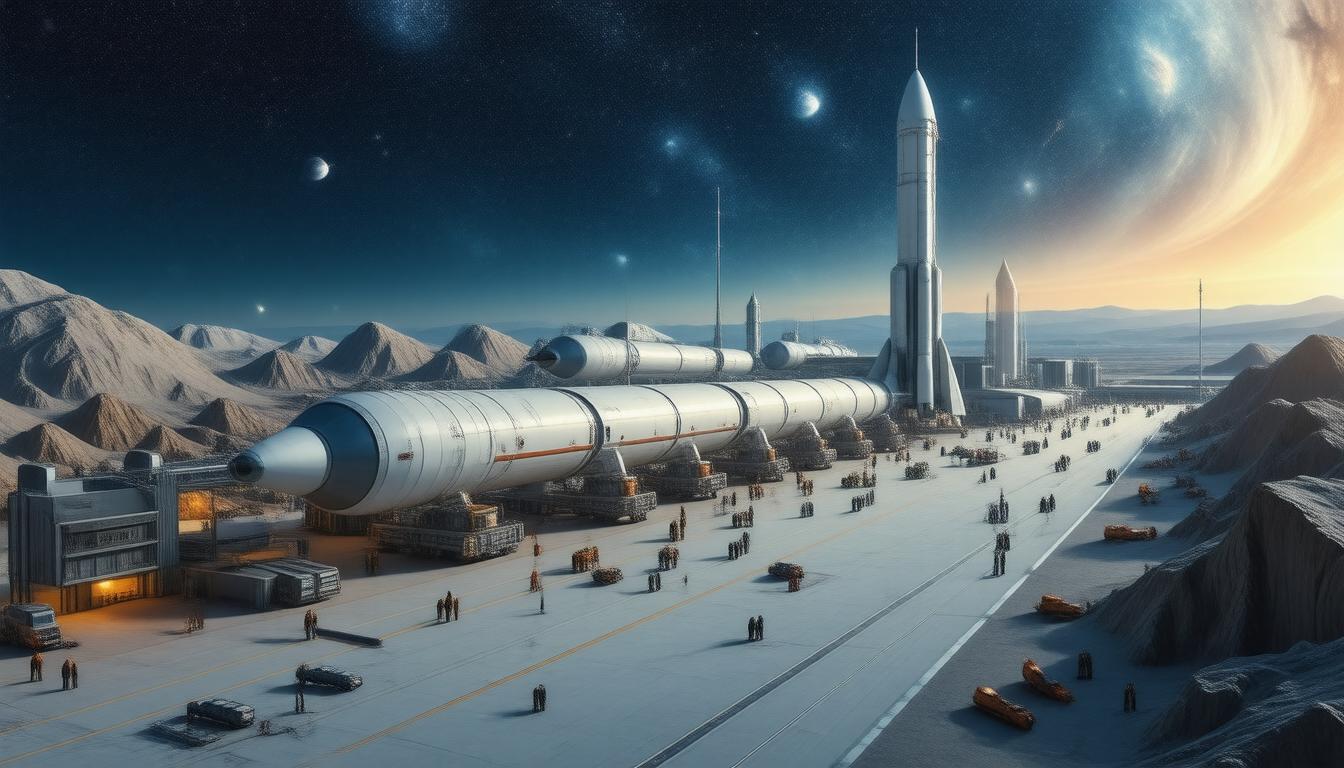
Understanding Rocket Propulsion
Rocket propulsion is primarily based on Newton’s Third Law of Motion, which states that for every action, there is an equal and opposite reaction. In simpler terms, when a rocket expels exhaust gases at high speed in one direction, it is propelled in the opposite direction. This process involves the acceleration of a working fluid—often produced through fuel combustion—resulting in thrust.
The thrust generated by a rocket engine is determined by two key factors: the mass flow rate of the exhaust and the exit velocity of the gases. The basic thrust equation incorporates these variables, illustrating how adjustments in either can enhance performance.
Categories of Rocket Engines
Two main categories of rocket engines dominate the field: liquid rocket engines and solid rocket engines.
Liquid Rocket Engines
Liquid rockets use separate tanks to store fuel and an oxidizer, which are mixed and ignited in a combustion chamber. This design allows for greater control over the thrust produced, as the flow of propellants can be adjusted or halted entirely. Liquid engines are known for their complexity, requiring pumps and other components but offering significant flexibility in operation. Notably, high-performance liquid engines, like those used in the Space Shuttle and the newer Centurion rocket engine, support various missions ranging from launching satellites to subtler in-space maneuvers.
Solid Rocket Engines
In contrast, solid rocket engines contain propellants that are pre-mixed and packed into a solid formulation. Once ignited, they burn until all the fuel is consumed. These engines are simpler and more robust, making them easier to store and handle, yet they lack the fine control of liquid engines. They are commonly used in booster segments, such as those powering the Space Shuttle, providing an initial thrust as the vehicle ascends.
Innovations in Rocket Propulsion
Recent advancements in rocket propulsion technology have paved the way for more efficient and capable systems. Innovations include:
Reusable Launch Systems
The push for sustainability in space travel has led to the development of reusable rocket systems. Companies are now focusing on designing vehicles that can land back on Earth after delivering payloads, significantly reducing launch costs and material waste. Recent efforts have seen reusable designs achieve successful landings, marking a revolution in space logistics.
Cryogenic Propulsion
Cryogenic rocket engines utilize super-cooled propellants, which can significantly enhance the efficiency of rocket systems. For example, cryogenic Orbital Transfer Vehicles (OTVs) can achieve high total impulse and perform dynamic maneuvers, enabling seamless transitions from Low Earth Orbit (LEO) to Geostationary Orbit (GEO). Such capabilities are essential for satellite deployment and deep-space missions.
In-Space Manufacturing Capabilities
Emerging concepts in in-space manufacturing are beginning to reshape the way we think about production beyond Earth. Companies are developing platforms capable of assembling and producing high-value products in orbit. This may eventually lead to the establishment of a robust economy in space, further enhancing human presence beyond our planet.
Hypersonic Technologies
Hypersonic propulsion systems, which enable speeds exceeding Mach 5, are garnering attention for both military and civilian applications. Such technologies allow for rapid travel across the globe and targeted, quick-response systems capable of supporting national defense strategies.
Conclusion
Rocket propulsion systems represent an intersection of theoretical physics and practical engineering, driving forward the potential for human exploration and commercial endeavors in space. As technology evolves—manifesting in areas like reusability, cryogenics, and advanced manufacturing—the landscape of space travel is set to change dramatically in the coming years. These innovations not only promise to make space more accessible but also open up new frontiers for research, industry, and discovery, ultimately helping humanity realize its dream of exploring the stars.
Join Alpha Centi and give a unique boost to your career and professional profile today! [color=rgb(4, 53, 157)]https://alphacenti.org/join/[/color]