

As humanity stands on the brink of interplanetary exploration, space colonization has transitioned from the realm of science fiction to a provocative area of scientific inquiry and technological advancement. The quest to establish permanent human presence beyond Earth raises complex questions about our survival, socio-political structures, and ethical considerations. This article delves into the concept of space colonization, the scientific and social challenges it presents, and the role of emerging technologies in making it a reality.
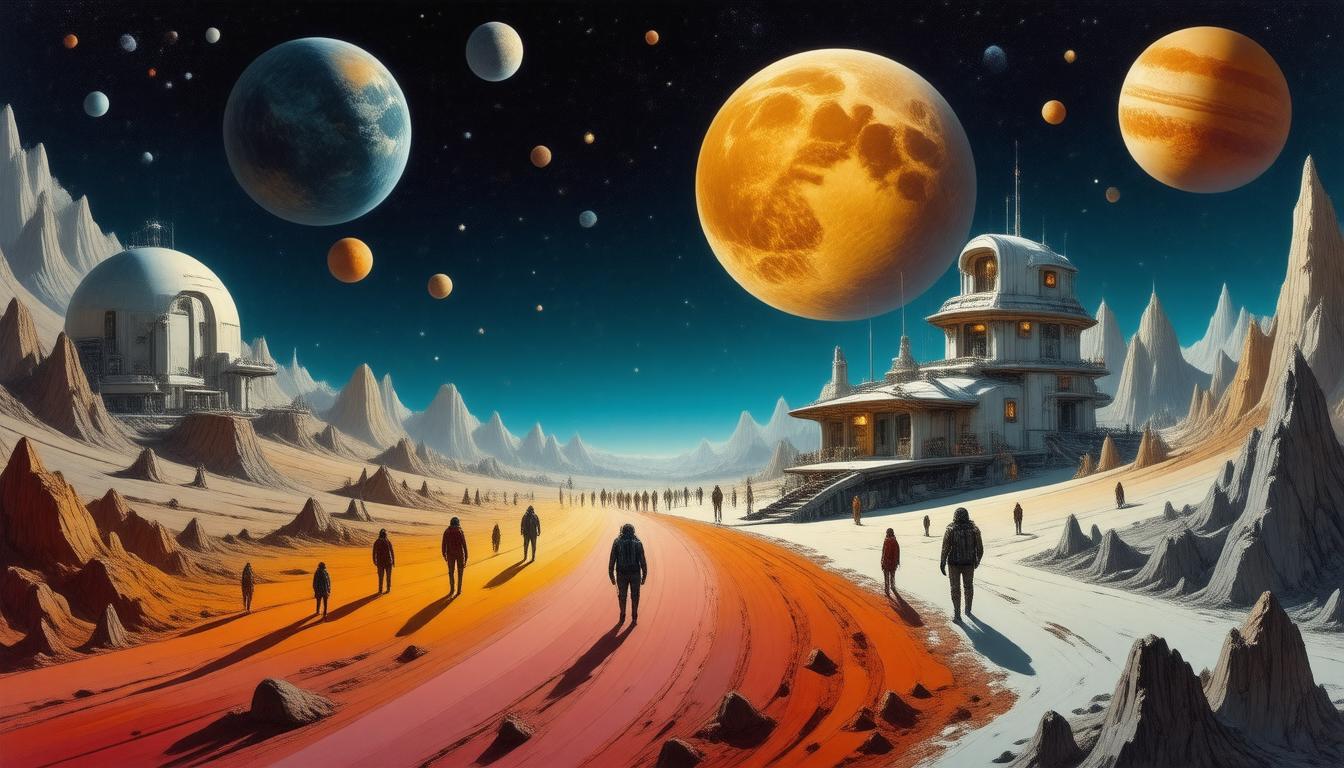
What is Space Colonization?
Space colonization refers to the establishment of human settlements outside of Earth. This broad concept encompasses everything from temporary research stations, like the International Space Station (ISS), to long-term colonies on celestial bodies such as the Moon or Mars. The Outer Space Treaty of 1967 plays a pivotal role in regulating such endeavors, emphasizing that space is a shared heritage of mankind and prohibiting territorial claims—an attempt to prevent the colonial dynamics seen on Earth from being replicated in space.
Historical Context and Motivation
Historically, the dreams of space colonization can be traced back to early astronomers and science fiction writers. In the 20th century, events such as the Apollo moon landing in 1969 catalyzed interest in human habitation beyond Earth. Recent global challenges, including pandemics and environmental crises, further validate the urgency of becoming a multi-planetary species. Proponents argue that diversifying our habitat minimizes existential risks and ensures the long-term survival of humanity.
Scientific and Technological Challenges
Despite the growing interest, space colonization faces significant challenges. The environment in space is inherently hostile; issues include exposure to radiation, the psychological effects of isolation, and the physiological impacts of long-duration spaceflight—such as muscle atrophy and bone density loss. Solutions are being explored in numerous fields:
- Controlled Ecological Life Support Systems (CELSS): These systems aim to recycle air, water, and nutrients to sustain human life in space.
- Radiation Protection: Innovations in materials science may yield effective shielding against cosmic rays and solar radiation, crucial for long-term habitation on bodies like Mars.
- 3D Printing and Low-Gravity Manufacturing: Advances in manufacturing technologies could allow colonists to produce tools, parts, and habitats out of local resources, greatly reducing the need to transport everything from Earth.
Socio-Political Considerations
The prospect of space colonization is not solely a technical challenge; it raises important socio-political questions. Advocates for colonization often cite the potential for economic growth and resource extraction from space as motivation. However, critics warn that this could lead to exploitative practices similar to those seen in colonial histories on Earth, perpetuating inequality and environmental degradation. Discussions around equity, governance, and regulations are crucial as humanity approaches potential colonization.
The Role of Private Enterprises
In recent years, private companies have emerged as key players in the space colonization movement. SpaceX, led by Elon Musk, has become synonymous with ambitious plans to colonize Mars, leveraging reusable rocket technology to reduce costs. Other enterprises, such as Blue Origin and Virgin Galactic, are also contributing to space travel, though with a focus on tourism rather than colonization. These developments highlight a shift in how space exploration is conducted, which raises additional questions about governance in space.
The Path Forward
Despite the numerous challenges, the ongoing research and initiatives from both public space agencies like NASA and private companies mark significant steps toward making space colonization a reality. Programs aimed at returning humans to the Moon, such as NASA’s Artemis, are paving the way for future Mars missions. Additionally, simulation projects on Earth are testing human endurance and the necessary technologies under controlled conditions.
Ultimately, while there is no definitive timeline for when humanity might establish a sustainable colony in space, the desire to explore and settle beyond our planet persists. The interplay of technological innovation, international collaboration, and ethical governance will shape the future of humanity among the stars.
Conclusion
Space colonization stands at the crossroads of opportunity and ethical responsibility. As humanity embarks on what could be the next great leap for our species, it is imperative to consider not just how we can live in space, but how we should do so. With the right commitment to sustainability and equity, the dream of being a multi-planetary civilization could transform from a distant vision into a considerable reality. The cosmos awaits, but the path we choose will define the legacy we leave for future generations.
Join Alpha Centi and give a unique boost to your career and professional profile today! [color=rgb(4, 53, 157)]https://alphacenti.org/join/[/color]